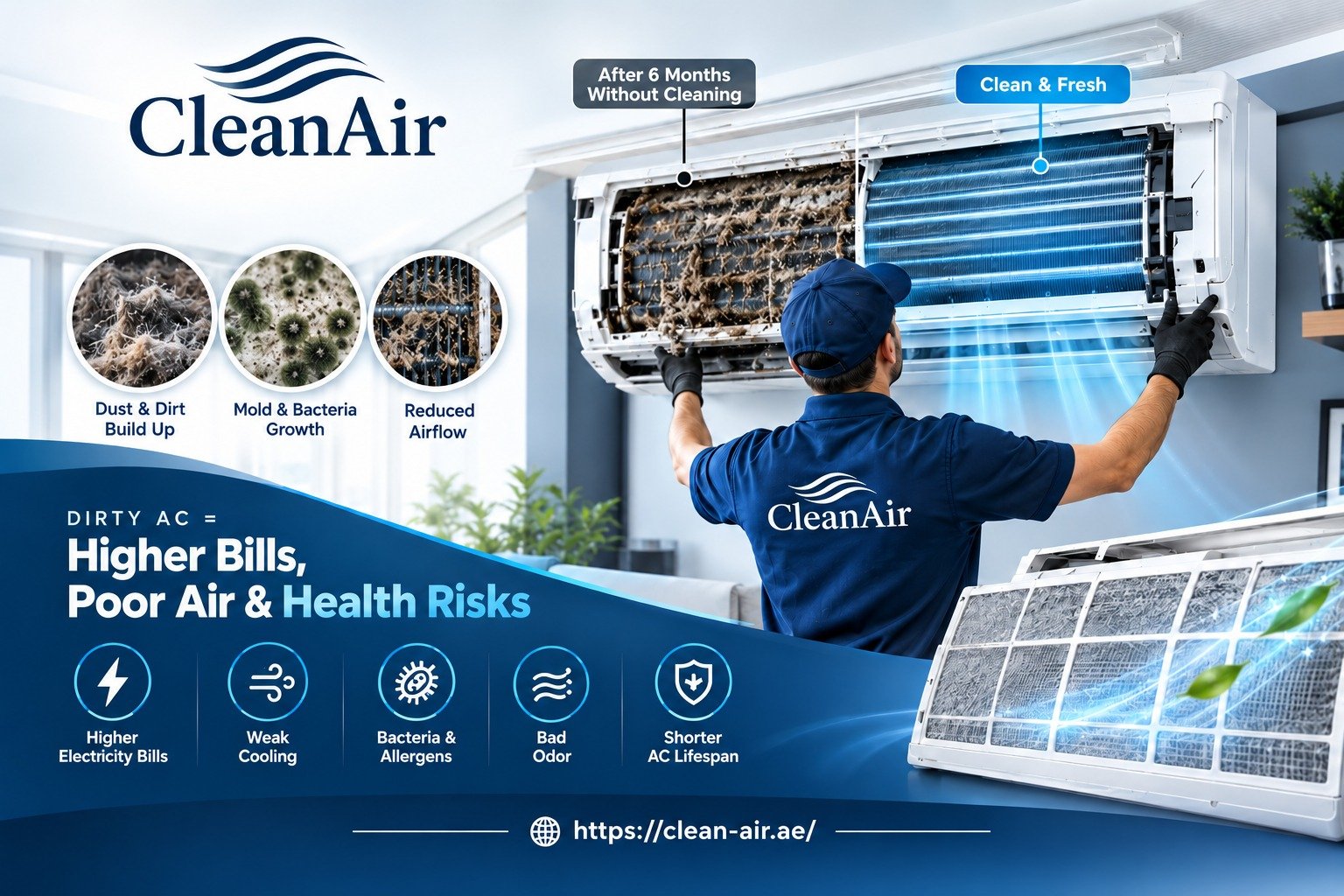
Your air conditioner runs for hours every day during hot months, and you probably only think about it when it stops cooling. But while it works, a lot is happening inside that you can’t see. Six months without cleaning is long enough to turn a clean machine into a dust-clogged, damp, and inefficient one.
An air conditioner doesn’t create cool air. It pulls warm indoor air across a cold evaporator coil, removes heat and moisture, and pushes the cooled air back into the room. That means every hour it runs, it moves a large volume of air from your home through the unit.
That air carries dust, pet hair, pollen, cooking residue, smoke, and fabric fibers. The filter catches most of it, but not all of it, and the filter itself fills up. The coil is also cold and wet from condensation, so anything that gets past the filter sticks to it easily.
The filter is the first thing to suffer. After months of use, it’s often covered in a thick layer of dust and lint. A clogged filter restricts airflow, so the fan has to work harder to pull in air. You may notice weaker airflow from the vents even though the unit is running at full speed.
Once the filter is saturated, dust bypasses it and settles on the evaporator coil. Because the coil is damp, this dust turns into a sticky film. This film acts as insulation, which stops the coil from absorbing heat from the air efficiently. The result is a unit that runs longer and still cools less.
Moisture, darkness, and organic dust make the inside of an AC an ideal place for mold and bacteria. Within a few months, colonies can form on the coil, drain pan, and blower wheel. When the fan runs, spores and particles can be blown into your room.
Your AC removes a surprising amount of water from the air, and that water leaves through a drain line. Dust, algae, and slime can clog it over time. A blocked drain may cause water to overflow, leak from the indoor unit, or stain walls and ceilings.
Restricted airflow from a dirty filter or coil can cause the evaporator coil to become too cold. Moisture on the coil then freezes, forming ice. When ice builds up, airflow drops even further and cooling stops. When it melts, you may see water leaking out.
The outdoor condenser coil releases the heat your AC has pulled from your home. If it’s covered in dust, leaves, or debris, it can’t shed that heat well. The compressor then runs hotter and under more strain, which shortens its lifespan.
Dust builds up on the blades of the blower wheel and unbalances it. You might hear more noise, feel less airflow, or notice the fan working harder than before.
When airflow is restricted and coils are dirty, your AC must run longer to reach the same temperature. Energy agencies note that a neglected system can lose a meaningful share of its efficiency, with common estimates ranging from around 5% to 15% depending on how dirty it is. Over a full summer, that adds up on your bill.
If your room takes longer to cool, or some areas stay warm, reduced airflow and a dirty coil are common causes. Many people assume they need a bigger AC when they actually need a cleaning.
A musty or sour smell when you switch the AC on usually means mold, mildew, or bacteria growing on the coil, drain pan, or inside the ducts. It’s one of the clearest signs your unit needs cleaning.
Because an AC circulates air through your home, dirty components can circulate allergens and irritants. People with asthma, allergies, or sensitive airways may notice more sneezing, coughing, congestion, or irritated eyes when the AC runs. These symptoms can have many causes, so if they persist, speak with a doctor.
Strain on the compressor, fan motor, and other parts increases the chance of failures. Small problems like clogged filters turn into expensive repairs when ignored, and they can shorten the unit’s overall lifespan.
Some basic maintenance is safe for most homeowners. Always switch off the power before you start.
Clean or replace the filter. Wash reusable filters with water and a mild detergent, dry them completely, and reinstall. Replace disposable ones when they’re dirty. Many people do this every 2 to 4 weeks during heavy use.
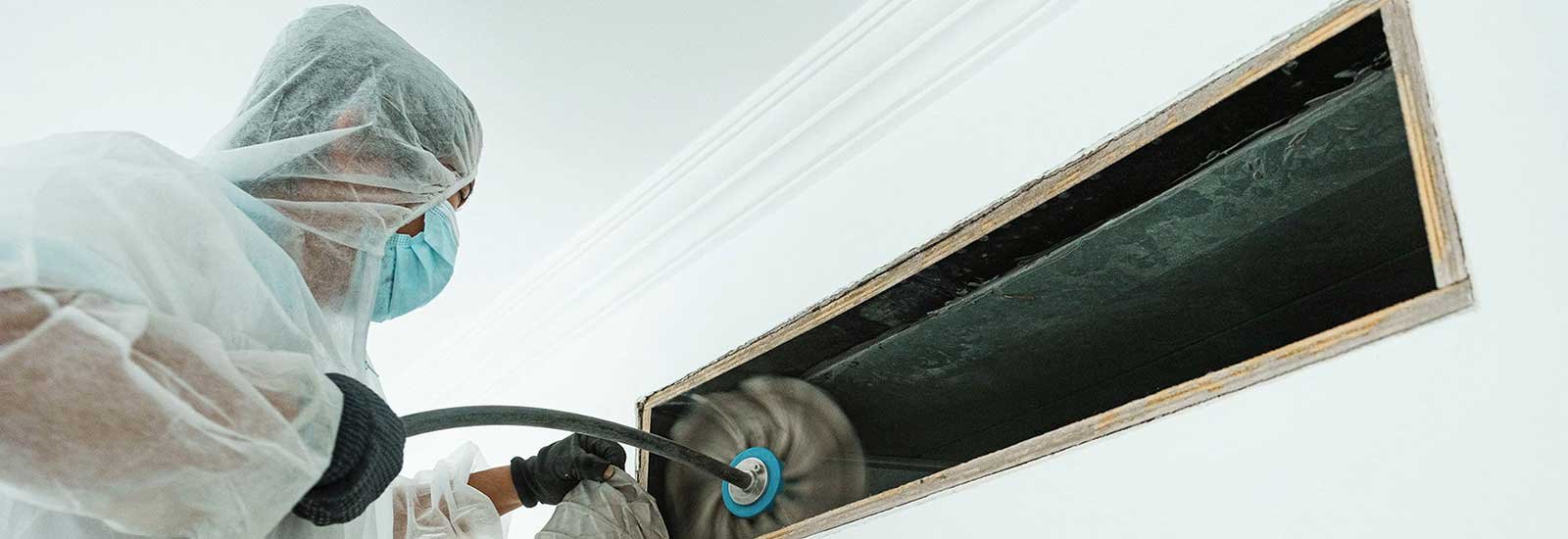
Deep cleaning involves opening the unit, washing the coils, flushing the drain line, and cleaning the blower, and it needs the right tools and care. Electrical parts and delicate fins are easy to damage. A technician can also inspect refrigerant levels, electrical connections, and overall condition at the same time. If your AC has gone six months or more without servicing, a professional deep clean is the safest choice. Book Your Appointment today with Clean Air.
What happens if I don’t clean my AC for 6 months?
Dust clogs the filter and coats the coils, airflow drops, mold and bacteria can grow, and the drain line may block. Your AC then cools less efficiently, uses more electricity, and may develop leaks, odors, or ice buildup.
Can a dirty AC make you sick?
A dirty AC can circulate dust, mold spores, and other particles, which may trigger allergies, coughing, or breathing irritation, especially in sensitive people. If you have ongoing symptoms, consult a doctor.
Why does my AC smell bad when I turn it on?
A musty or sour smell usually comes from mold, mildew, or bacteria growing on the coil, drain pan, or blower. A professional cleaning typically fixes it.
How often should I clean my AC filter?
Check it every 2 to 4 weeks during regular use. If you have pets, dust, or run the AC all day, clean it more often.
Does a dirty AC increase electricity bills?
Yes. Restricted airflow and dirty coils force the AC to work longer to reach the set temperature, which increases energy consumption.
Why is my AC leaking water?
The most common cause is a clogged drain line. A frozen coil melting can also cause leaks. Both are linked to poor maintenance.
Why is my AC not cooling properly?
Common causes include a clogged filter, dirty coils, a blocked drain, or low refrigerant. Cleaning the filter is a good first step. If that doesn’t help, have a technician inspect the unit.