Dubai’s hot climate, frequent dust and sand exposure, and heavy reliance on air conditioning make regular HVAC maintenance an important part of keeping indoor spaces comfortable. While changing or cleaning accessible AC filters is important, the ductwork that distributes conditioned air throughout a property can also collect dust and debris over time.
So, how often should you clean AC ducts in Dubai? There is no single schedule that fits every property. The appropriate interval depends on the property’s location, occupancy, indoor dust levels, renovation history, HVAC system, and the condition of the ductwork. A professional inspection can help determine whether cleaning is actually needed.
Your AC duct system carries conditioned air from the air-handling equipment to rooms throughout the property. If dust and debris accumulate inside accessible parts of the system, they can become part of the indoor environment when air moves through the system. Regular inspection and appropriate cleaning can help maintain a cleaner HVAC system and support comfortable indoor air circulation.
For many properties, a professional inspection every 1–2 years is a practical starting point, with cleaning performed when inspection shows significant dust, debris, contamination, or other conditions that justify it. Properties exposed to unusually high dust, renovation work, heavy occupancy, or other specific conditions may require attention sooner.
AC unit cleaning and duct cleaning are related but different services. Cleaning an indoor unit can address accessible components such as filters, coils, blower areas, drain components, and other parts depending on the service. Duct cleaning focuses on the air-distribution network and accessible duct components. A complete HVAC maintenance plan may require attention to both, depending on the system and inspection findings.
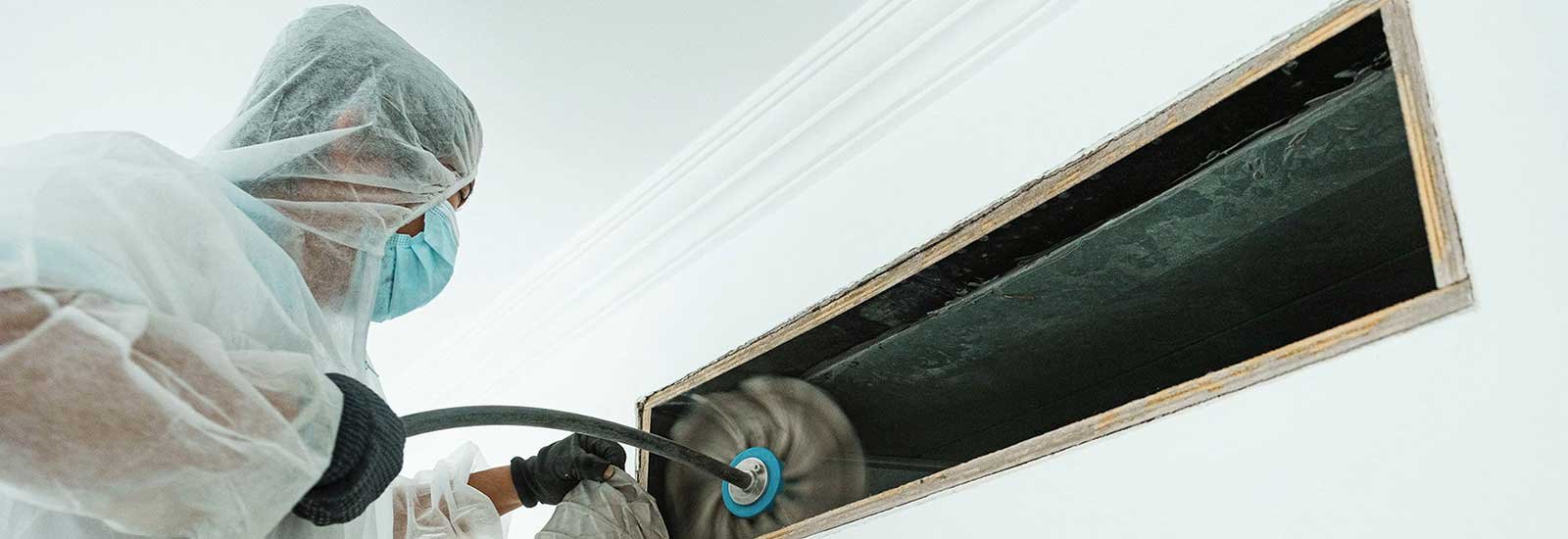
The exact process varies according to the HVAC system and property. A professional service should begin with an assessment of the system and accessible components. Depending on the system, the work may include protecting the work area, inspecting vents and duct access points, removing accumulated dust and debris with suitable professional equipment, cleaning accessible components, and checking the system after service.
Before booking, ask the service provider what areas are included, what equipment will be used, whether vents and grilles are included, and whether any areas of the duct network are inaccessible.
AC duct cleaning prices in Dubai can vary significantly depending on property size, number of ducts or air outlets, system design, accessibility, level of contamination, and the scope of work. For that reason, a single generic price should not be treated as a universal rate. Ask for a clear quotation describing what is included before work begins.
Cleaning a dirty HVAC system can remove accumulated dust and debris from the cleaned components, which may help maintain a cleaner air-distribution system. However, indoor air quality depends on many factors, including filtration, ventilation, humidity, outdoor air infiltration, cleaning practices, building materials, and potential moisture problems. Duct cleaning should therefore be considered one part of an overall indoor-air-quality and HVAC maintenance strategy.
Dubai’s environment can expose buildings to dust and fine particles, while air-conditioning systems operate for long periods to maintain indoor comfort. This makes regular filter maintenance and HVAC inspection important. Where inspection shows significant accumulation inside accessible ductwork or HVAC components, professional cleaning may be appropriate.
Consider arranging an inspection when you notice persistent dust, unusual odors, visible debris, unexplained airflow issues, or after major renovation work. If the property’s duct-cleaning history is unknown, an inspection can also help establish a maintenance baseline.
Homeowners can safely perform routine tasks such as replacing or cleaning accessible filters according to the manufacturer’s instructions and keeping visible vents clean. Duct networks, however, can be difficult to access and clean thoroughly without appropriate equipment and experience. Professional cleaning is more suitable when significant buildup is suspected or when the duct system requires inspection beyond accessible household components.
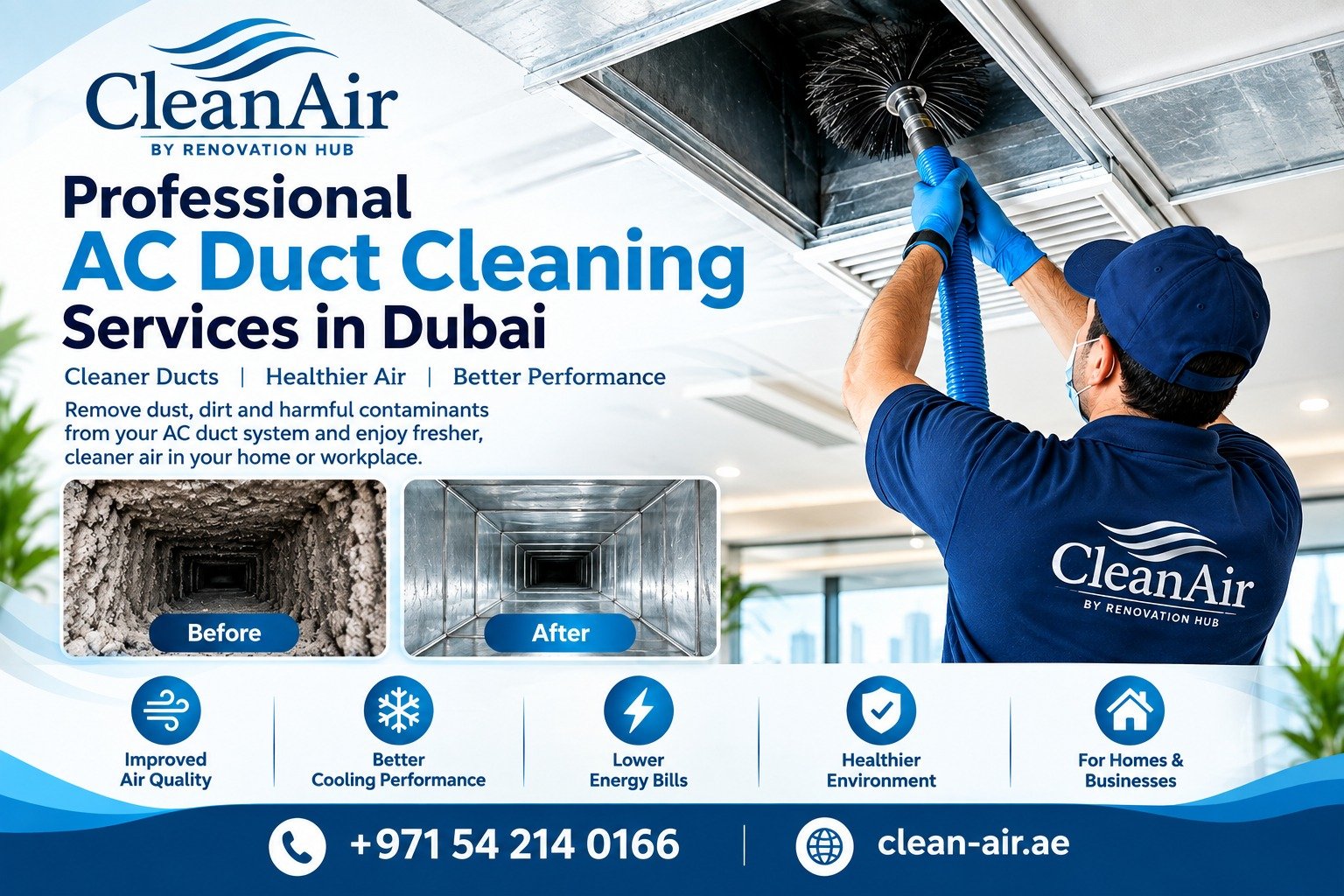
Clean Air provides professional AC and duct-cleaning services in Dubai. Customers can contact the team to discuss the property, understand the service scope, and arrange an inspection or booking where appropriate.
How often should AC ducts be cleaned in Dubai?
There is no universal interval. A professional inspection every 1–2 years can be a practical starting point, while properties with high dust exposure, renovation work, heavy occupancy, or other specific conditions may need attention sooner.
How do I know if my AC ducts are dirty?
Common reasons to arrange an inspection include persistent dust, unusual odors, visible debris around vents, unexplained airflow problems, and a long or unknown cleaning history.
How long does AC duct cleaning take?
The duration depends on the size and layout of the property, the HVAC system, accessibility, and the amount of work required. A service provider should confirm the expected duration after assessing the property.
Is AC duct cleaning the same as AC cleaning?
No. AC cleaning may focus on the indoor unit and accessible HVAC components, while duct cleaning focuses on the air-distribution network. Both may be appropriate depending on the system.
Does duct cleaning remove all dust from a home?
No. Duct cleaning addresses the cleaned HVAC components. Household dust also comes from outdoor air, people, fabrics, surfaces, construction materials, and other sources.
Should I clean my ducts after home renovation?
A post-renovation HVAC inspection can be worthwhile because construction activity can generate significant dust. Cleaning should be based on inspection findings and the condition of the system.
Can dirty ducts cause bad AC smells?
They can be one possible source of odors, but smells can also come from moisture, drain problems, filters, coils, biological growth, or other HVAC and building conditions. Identifying the source is important.