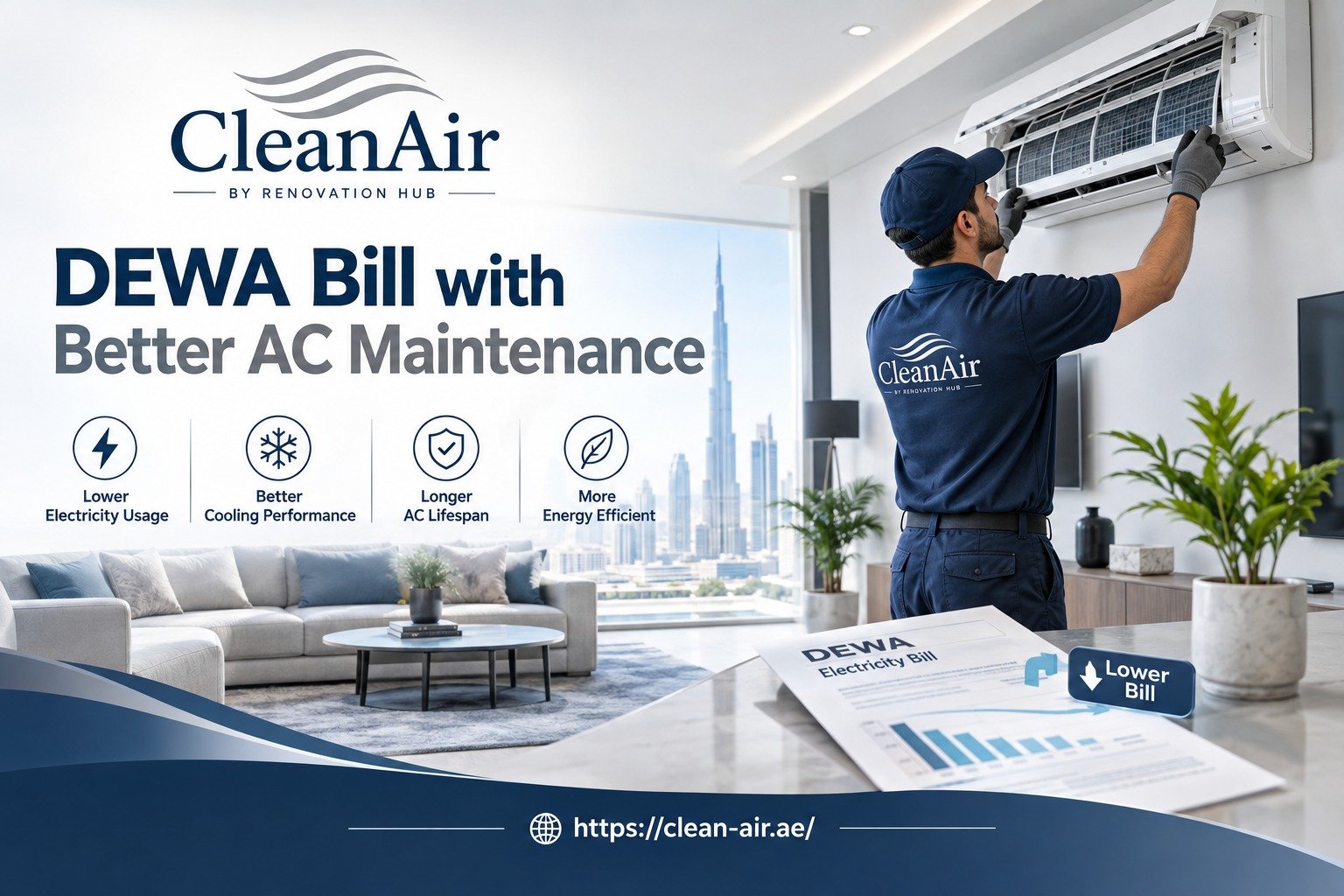
If you live in Dubai, you already know the drill: the moment summer hits, your DEWA bill climbs right along with the temperature. For most households and businesses in the UAE, air conditioning is the single biggest driver of that monthly cost often accounting for 60–70% of total electricity consumption.
The good news? You don’t need to suffer through a hot apartment to save money. In most cases, a poorly maintained AC unit is the real culprit behind inflated bills, not the AC itself. A neglected system has to work significantly harder to produce the same amount of cooling, and that extra effort shows up directly on your DEWA statement.
Here’s how proper AC maintenance can meaningfully lower your electricity costs and what you can start doing this week.
An air conditioner cools your home by absorbing heat from indoor air and releasing it outside. When any part of that process is obstructed a dirty filter, a grimy coil, blocked ducts the system has to run longer and consume more power to reach the same set temperature.
Over time, this inefficiency compounds. A unit that’s 20–30% less efficient due to neglect doesn’t just cool poorly; it can push your electricity bill up by a similar margin. In Dubai’s climate, where ACs often run nearly non-stop for several months a year, that difference adds up fast.
A clogged filter restricts airflow, forcing the compressor and fan to work overtime. Reusable filters should be cleaned every 2–3 weeks during peak summer months, and disposable filters replaced on the manufacturer’s recommended schedule. This is the single cheapest, fastest way to cut unnecessary energy use.
Dust and grime on the evaporator and condenser coils act as insulation, blocking the heat transfer your AC depends on. Dirty coils force the compressor to run longer to hit the same temperature.
Professional coil cleaning every six months keeps heat exchange efficient and reduces compressor strain.
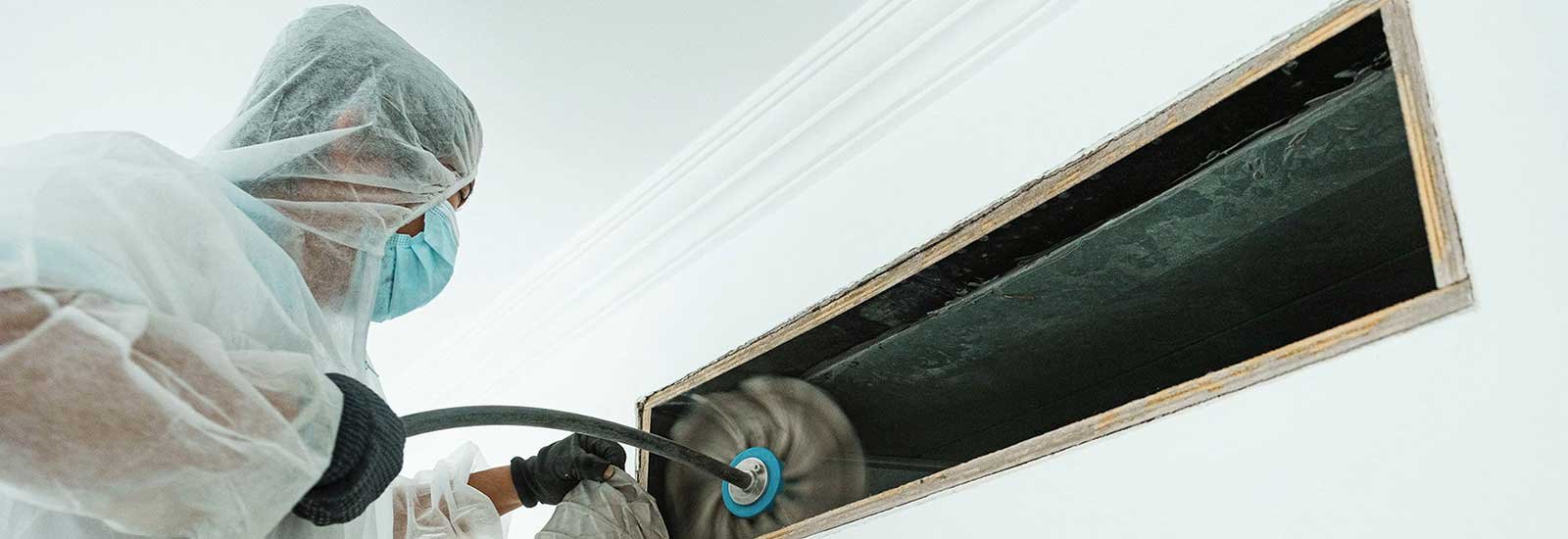
Leaky or dust-clogged ducts lose cooled air before it ever reaches your rooms, meaning your AC has to overproduce cooling to compensate. Sealed, clean ducts deliver conditioned air more directly, which translates into shorter run times and lower consumption.
Low refrigerant doesn’t just reduce cooling power it makes the compressor run continuously trying to reach the target temperature, drawing far more electricity in the process. If your AC is running long cycles without cooling effectively, low refrigerant is a common cause and should be checked by a technician.
Every degree lower than 24°C can increase energy consumption by roughly 6–8%. Setting your thermostat between 23–25°C, using a programmable or smart thermostat, and avoiding drastic temperature swings all reduce the load on your system.
Leaks, banging noises, or reduced airflow are often early signs of a system working harder than it should. Addressing these issues quickly rather than waiting for a full breakdown prevents the gradual efficiency loss that quietly inflates your bill month after month.
This isn’t AC maintenance in the technical sense, but it directly affects how hard your AC has to work. Gaps around doors and windows let cool air escape and hot air in, forcing continuous compressor operation. Weather stripping and door seals are a low-cost way to support everything else on this list.
While exact savings depend on your unit’s age, size, and how neglected it’s been, well-maintained AC systems typically use 15–25% less energy than poorly maintained ones running under the same conditions. For a Dubai household with a DEWA bill of AED 800–1,200 in peak summer months, that can mean savings of AED 150–300 per month simply from keeping the system clean and properly serviced.
Sticking to a schedule like this rather than waiting for a problem to appear is the most reliable way to keep both your comfort and your DEWA bill under control.
Lowering your DEWA bill doesn’t have to mean sacrificing comfort. In most Dubai homes, the fastest path to real savings is a well-maintained AC system, not a new one. Regular filter care, coil and duct cleaning, and timely professional servicing keep your unit running the way it was designed to efficiently, quietly, and without draining your electricity budget.
If it’s been more than six months since your last AC service, that’s usually the first place to look before your next bill arrives.
If You Want AC Maintainence Service Book Your Slot today with Clean Air
How much of my DEWA bill actually comes from AC usage?
In most Dubai homes, air conditioning accounts for roughly 60–70% of total electricity consumption, especially during the hotter months from May to September.
How often should I clean my AC to save on electricity?
Filters should be cleaned every 2–3 weeks in summer, while coils and ducts should be professionally cleaned every 6 to 12 months for optimal efficiency.
Does the thermostat setting really make a big difference?
Yes. Each degree below 24°C can increase energy use by around 6–8%, so keeping your thermostat between 23–25°C offers a noticeable balance of comfort and savings.
Can a dirty AC really increase my bill that much?
Yes. A poorly maintained system can be 20–30% less efficient, which directly translates into a proportionally higher DEWA bill for the same level of cooling.
Is it worth getting professional AC cleaning instead of doing it myself?
DIY filter cleaning helps, but coils, ducts, and refrigerant levels require professional tools and expertise to clean and inspect safely and effectively and improper handling can reduce efficiency further.
How soon will I notice a difference in my bill after AC maintenance?
Many customers notice a difference in their very next billing cycle, particularly after coil and duct cleaning, since these directly restore the system’s cooling efficiency.
What is the best time to schedule AC maintenance in Dubai?
The ideal times are just before summer (March–April) and after peak summer ends (September–October), to ensure your system is ready for heavy use and to address any wear afterward.