
Black dust around AC vents, black dust from AC vents Dubai, dirty AC ducts Dubai, AC duct cleaning Dubai, dust from air conditioning vents, HVAC cleaning UAE, indoor air quality Dubai
Noticing black dust, dark marks or a dirty-looking ring around your air-conditioning (AC) vents can be frustrating. In Dubai, where air conditioning is used for much of the year and outdoor dust can enter buildings, residents may notice residue collecting around supply grilles, ceiling diffusers or nearby surfaces. Sometimes the marks appear again soon after cleaning.
Black residue around an AC vent does not automatically mean that mould is present or that the duct system is unsafe. It may be ordinary household dust, soot, fine airborne particles, residue associated with moisture, or dirt collecting where air escapes around a grille. The appearance alone cannot identify the material. The best solution is to find the source rather than repeatedly wiping the visible marks.
Air-conditioning systems move air through filters, cooling components, duct work and supply outlets. If dust is present in the surrounding room or parts of the HVAC system, particles may settle on or around a vent. Air leakage, poor filter fit, neglected maintenance or moisture can also contribute to visible deposits.
The pattern can offer clues. A dark outline immediately around the edge of a grille may be associated with air leakage or particles settling on a surface. Dust blowing from the outlet may point to a filter, duct or internal cleanliness issue. These are clues only not a diagnosis. A qualified technician should inspect persistent or unexplained deposits.
AC filters capture airborne particles before air circulates through the system. When a filter is heavily loaded, damaged, missing or fitted incorrectly, some particles may pass around it or the system may not perform as intended. The correct filter type and replacement or cleaning schedule depend on the equipment and the manufacturer’s instructions.
Dust can enter a building through doors, windows, construction activity and everyday use. Some particles may settle in ductwork over time. If deposits are disturbed, or if other system conditions allow particles to travel, dust may appear near supply outlets. Visible dust at a vent does not prove that the entire duct system needs cleaning; an inspection can help determine whether cleaning is justified.
Condensation, leaks, blocked drainage or persistently damp materials can create moisture problems around HVAC equipment. Damp areas may support microbial growth, including mould, but black colour alone is not proof of mould. If you notice persistent dampness, a musty smell, water stains or visible growth, arrange an inspection and address the moisture source. Do not dry-brush or disturb suspected mould.
A filter that is unsuitable for the unit, poorly seated or surrounded by gaps may allow unfiltered air to bypass it. This can contribute to dust collecting on internal surfaces. Filters should be selected for compatibility with the system; fitting a filter that is too restrictive can also affect airflow.
If air escapes through gaps around a grille or duct connection, it can carry fine particles that settle on nearby ceilings and walls. Dark marks concentrated around the perimeter of a vent may justify checking the grille seal, duct connection and surrounding ceiling cavity.
Dust can collect on return grilles, fan components, coils and other accessible surfaces when maintenance is overdue. A technician can assess which components require cleaning and whether the issue is caused by the HVAC system or by ordinary room dust. Electrical or mechanical components should not be opened or cleaned by an unqualified person.
Fine sand and dust can enter through building openings, while renovation work, candles, cooking, smoking and some combustion sources can add particles to indoor air. These particles may settle around vents and other surfaces. Consider recent construction, nearby road dust and indoor activities when looking for the source.
The risk depends on what the residue is and where it comes from. Ordinary dust is common indoors, but repeated or heavy particle deposits may indicate a maintenance issue or a source of indoor contamination that should be checked. If there is visible moisture, a persistent musty odour, water damage or suspected mould, investigate promptly and correct the moisture problem.
People with asthma, allergies or other respiratory sensitivities may be more affected by poor indoor air quality. However, it is not possible to assess an individual’s health risk from the colour of a vent stain. If occupants experience symptoms, they should seek advice from a healthcare professional and arrange an appropriate building inspection.
For light surface dust, a few basic steps may help. Turn the AC off before cleaning the visible grille. Use a soft, slightly damp microfiber cloth on accessible, non-electrical surfaces and dry the area afterwards. Avoid spraying cleaners into the vent or duct. Do not reach into the ductwork, remove equipment panels, or disturb material that may be mould.
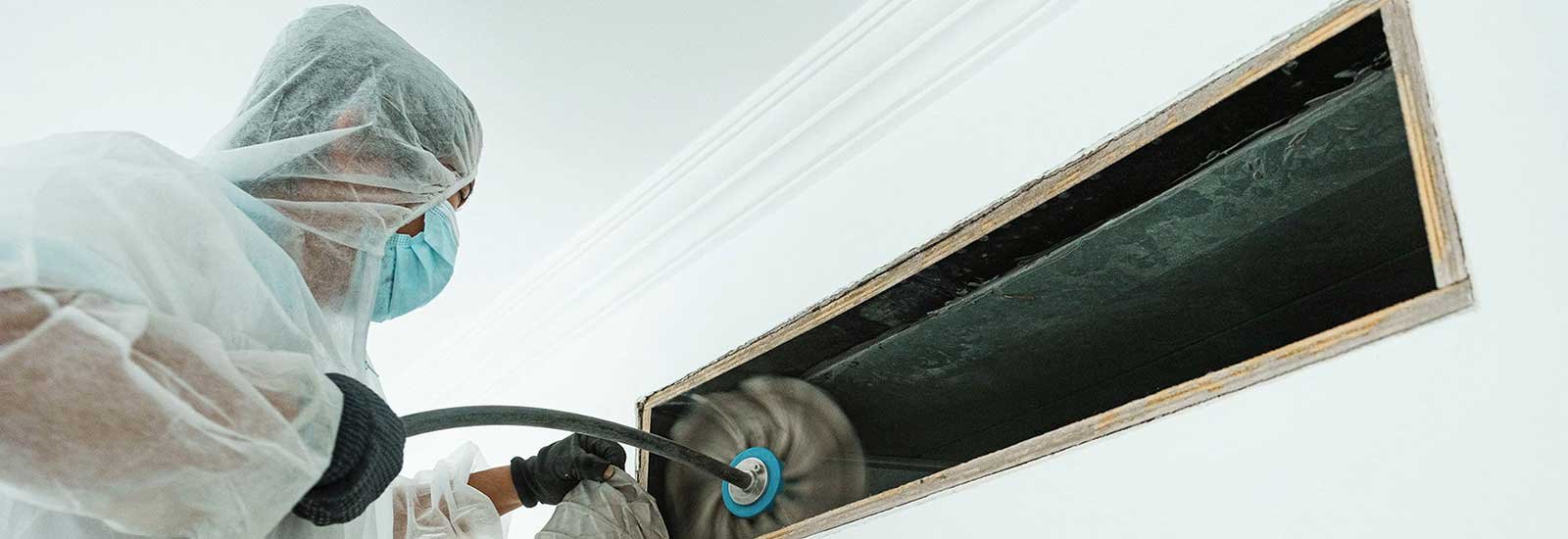
A professional HVAC inspection can help identify whether the source is a dirty filter, a leaking connection, contaminated ductwork, moisture or another issue. Where inspection shows that duct cleaning is appropriate, trained technicians can use suitable equipment and procedures to remove accumulated dust and debris from the relevant parts of the system.
A thorough service should not be limited to wiping the visible vent. The scope should be based on the system design and inspection findings, and may include accessible grilles, duct sections and other components where cleaning is needed. If there is a leak, drainage fault or moisture source, that problem must also be corrected. Cleaning alone will not prevent residue from returning if the underlying cause remains.
Before booking, ask the service provider what areas are included, what equipment and containment methods will be used, whether the technician will inspect for moisture or leakage, and whether any additional repairs are quoted separately.
Consider arranging an inspection if black deposits return soon after surface cleaning, dust appears to blow from multiple vents, airflow changes noticeably, or there is a persistent unusual or musty smell. Visible water damage, condensation or suspected mould also deserves prompt attention. If the system has recently undergone renovation or has not been maintained for a long period, a condition assessment may be useful.
There is no single duct-cleaning interval that suits every property. The need depends on building conditions, occupancy, filter performance, nearby construction, system design and inspection findings. A reputable provider should explain why a service is recommended rather than promise that every system needs cleaning on a fixed schedule.
If you are seeing recurring dust around your AC vents, Clean Air UAE can help you explore the right next step for your property. An inspection can help distinguish between surface dust, possible airflow leakage, filter issues and conditions that may require a closer look at the HVAC system.
For homes, apartments, villas and workplaces, the appropriate service should be based on the actual condition of the system. Contact Clean Air UAE to discuss your concern, the type of property and the symptoms you have noticed. Ask for a clear explanation of the inspection findings and the proposed work before proceeding.
Why is there black dust around my AC vents?
Black dust around AC vents can be caused by ordinary dust, soot or other airborne particles, filter problems, air leakage, or moisture-related contamination. The appearance alone cannot identify the material, so recurring deposits should be inspected.
Can construction dust damage my AC system?
Excessive construction dust can clog filters, accumulate on HVAC components, and restrict airflow. Proper protection during renovation and post-renovation maintenance can help reduce these problems.
Is black dust coming from AC vents always mould?
No. Black residue is not automatically mould. It may be dust, soot or another deposit. Mould cannot be confirmed by colour alone; signs of moisture, water damage or persistent musty odours should be assessed by a qualified professional.
How do I stop black dust coming from my AC vents?
Check the filter in accordance with the unit manual, clean accessible vent surfaces safely, and look for visible moisture or gaps around the grille. If dust keeps returning or appears to blow from the outlet, arrange a professional HVAC inspection.
Can dirty AC ducts affect indoor air quality?
Dust and debris in HVAC components can contribute to indoor particle levels, particularly if deposits are disturbed or transported through the system. An inspection can establish whether duct cleaning or another corrective action is appropriate.
How often should AC ducts be cleaned in Dubai?
There is no universal schedule for every Dubai property. Cleaning needs depend on system condition, building use, dust exposure, and filter maintenance and inspection results. Follow equipment maintenance guidance and seek an assessment when there are signs of contamination.