Trending Insights

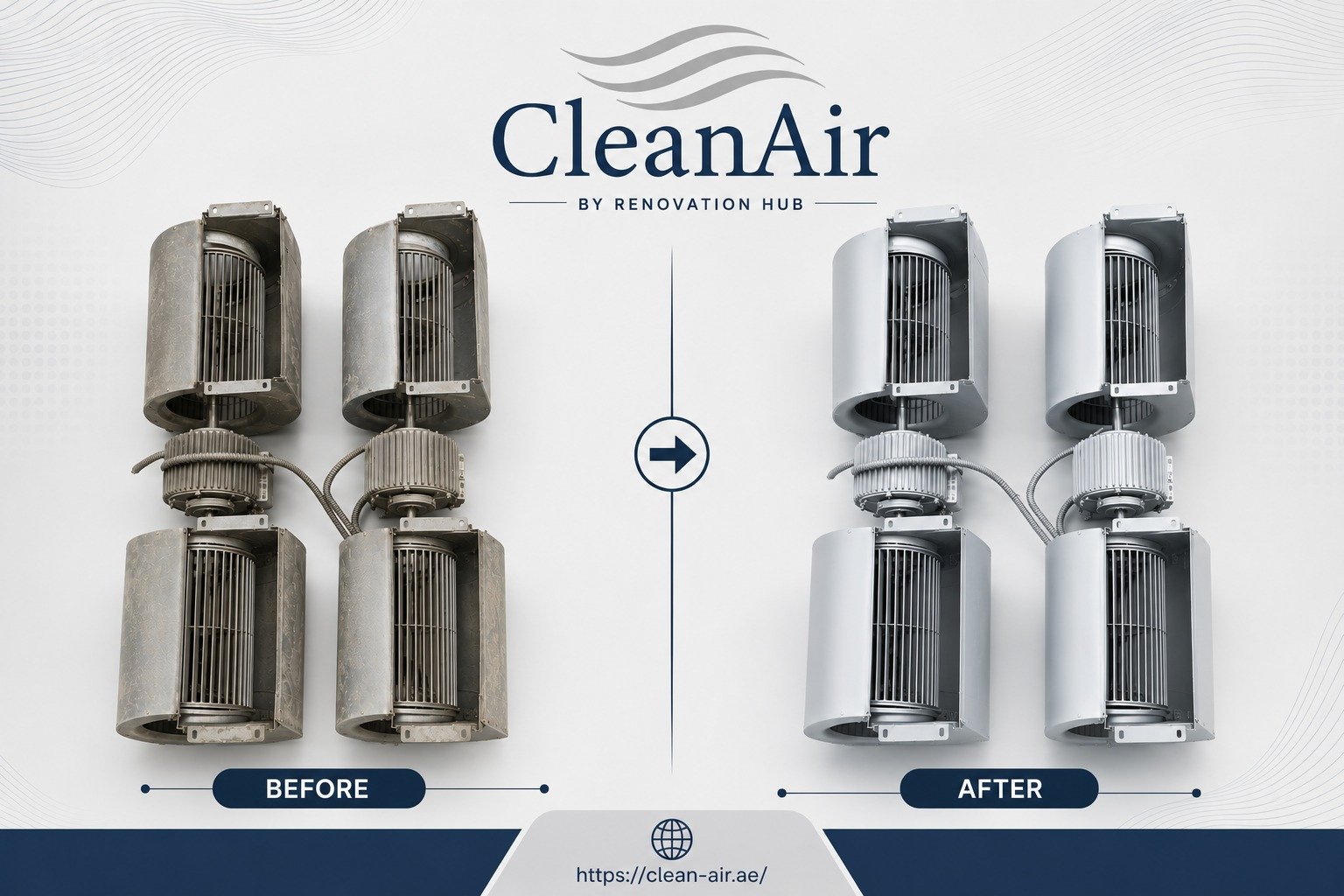
Does AC cleaning actually make a difference, or is it just a routine expense? It’s one of the most common questions we get at Clean Air. So instead of just telling you, we’re showing you. Below is a real look at what changes when a neglected air conditioning system gets a Full AC Cleaning Services, professional deep clean, coils, filters, ducts, and drain lines included.
If you’ve been putting off servicing your unit, these before-and-after results might convince you otherwise.
Most units we’re called out to service haven’t been cleaned in 6 to 12 months. Here’s what we typically find:
Coils caked in dust and grime:
Evaporator and condenser coils covered in a thick layer of dust, sometimes mixed with grease or biological film, drastically reducing heat exchange efficiency.
Clogged Filters:
Filters so packed with dust and hair that airflow is visibly restricted, some are almost completely grey or brown instead of white.
Mould and mildew buildup:
Dark spots and a musty smell inside the indoor unit and ductwork, especially in units near kitchens or humid areas.
Weak, uneven airflow:
Rooms furthest from the unit barely get any cool air, while the space near the AC feels only mildly cooler than the room.
Water pooling or leaking:
Drain lines blocked with sludge, causing water to back up and drip from the indoor unit.
Higher discharge air temperature
Air coming out of the vents often measures several degrees warmer than it should for that thermostat setting.
The Cleaning Process We Apply
Once the cleaning is complete, the difference is usually obvious within minutes of the unit running again:
The core reason before-and-after results are so noticeable comes down to heat exchange efficiency. Coils are designed to transfer heat as air passes over them. When they’re coated in dust, grime, or mould, that heat exchange is blocked, forcing the system to run longer and harder just to reach the same temperature. Clearing that buildup restores the unit close to its original factory performance, which is why customers often say their AC feels “brand new” after a deep clean.
The results of a professional cleaning typically hold strong for 2 to 4 months in the UAE’s climate, depending on usage intensity, dust exposure, and whether the unit is running constantly. Homes near construction sites, sandy areas, or with pets tend to see buildup accumulate faster and may benefit from more frequent servicing.
Numbers and descriptions only tell part of the story, the real proof is in how your space feels once the job is done: cooler air, no odors, and a noticeably lighter electricity bill. If your AC hasn’t been professionally cleaned in the last few months, there’s a good chance it’s already underperforming without you realizing it.
Contact Clean Air today to book a deep cleaning and experience the before-and-after difference in your own home or office.
How much colder does the air get after AC cleaning?
Results vary by unit condition, but it’s common to see discharge air temperature drop several degrees once coils and filters are properly cleaned and airflow is restored.
Will I actually see a lower electricity bill after cleaning?
Most customers do notice a reduction, since a clean system doesn’t have to work as hard to reach the same cooling level. The exact savings depend on how neglected the unit was beforehand.
How dirty does an AC coil typically get before cleaning?
It depends on usage and environment, but coils that haven’t been cleaned in 6-12 months are often visibly caked in dust, sometimes mixed with grease or mould, especially in kitchens or humid spaces.
Can AC cleaning fix a musty smell completely?
In most cases, yes. Odors are usually caused by mould or bacterial buildup, which our sanitization step is designed to eliminate at the source rather than just mask.
How soon after cleaning will I notice the difference?
Most customers notice a difference in airflow and temperature immediately once the unit is switched back on after service.
Does before-and-after performance depend on the type of AC unit?
The general improvement pattern applies to split units, ducted systems, and central AC alike, though the specific gains can vary based on the unit’s age, size, and prior condition.